Our Approach · Ages 2–6 · Edmonds, WA
What Montessori looks like at GKA
Our program develops the whole child, academically, socially, emotionally, and creatively, through meaningful daily work at each child’s own pace.
Who was Maria Montessori?
Dr. Maria Montessori was an Italian physician and scientist who spent her life observing how young children learn. She found that children teach themselves when given real work, real choices, and a carefully prepared room. Her method has been in use around the world for more than a century.
What is Montessori?
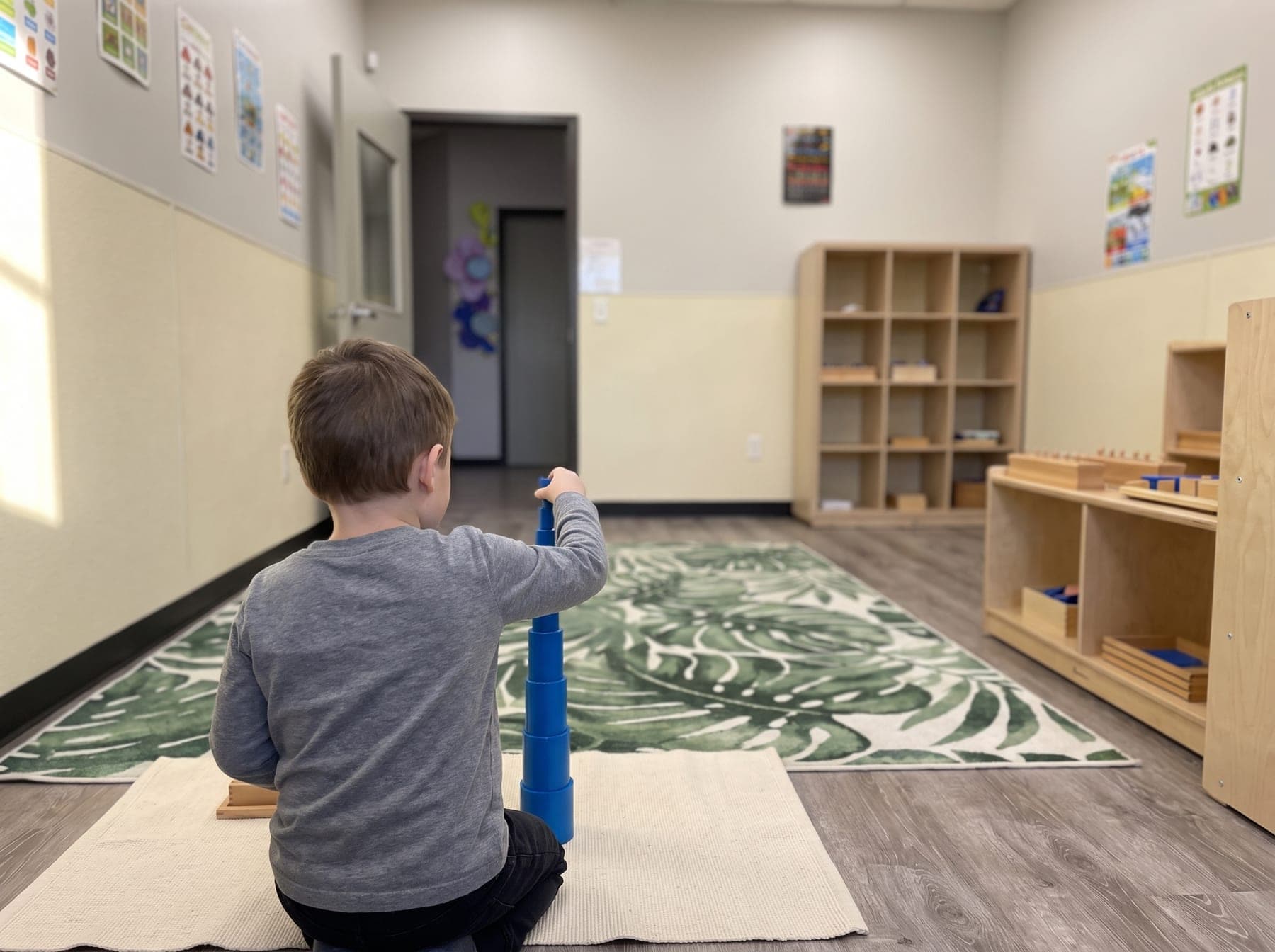
Montessori is a child-led approach to early learning. Instead of one lesson for the whole group, children choose work from prepared shelves and move through it at their own pace, while a trained adult guides rather than directs. The aim is independence: a child who can pour their own water, choose their own work, and finish it.
What we tell you up front
Our classroom is led by trained Montessori guides, our tuition is published for every schedule, and we are preparing our Edmonds home to Washington’s child care licensing standards.
The Pillars
Six habits we practice every day
Every material, lesson, and routine at GKA serves one of these.
Independence
Children do real things for themselves, from pouring water to putting on a coat.
Respect
For each child, for one another, and for the work of the classroom.
Concentration
Long, uninterrupted stretches of work, so focus has time to build.
Hands-on exploration
Concrete materials children can touch, move, and master.
Self-paced learning
Each child moves on to new work when they are ready.
Creative expression
Art, music, and open-ended work, available every day.
The Learning Areas
What your child will work on
Seven areas of one classroom. Every child works through them in their own order and at their own pace.
Practical Life
Pouring, buttoning, and preparing snack. Real work that builds coordination, focus, and confidence.
Sensorial
Materials that refine the senses: sorting, grading, and comparing size, sound, texture, and color.
Language Development
Conversation, vocabulary, and sandpaper letters, building toward reading and writing at the child's pace.
Mathematics
Beads, rods, and counters make quantities real long before abstract symbols appear.
Cultural Studies
Geography, science, and nature study: maps, plants, animals, and the world beyond the classroom.
Art & Music
Drawing, painting, singing, and movement, on the shelves every day and treated as real work.
Social & Emotional Learning
Grace and courtesy lessons: how we greet, share, wait our turn, and care for one another.
The easiest way to understand it is to visit.
Book a Tour
“To stimulate life, leaving it then free to develop, to unfold, herein lies the first task of the educator.”
It is the idea behind every shelf and every lesson at GKA.
The Prepared Environment
The GKA Montessori environment
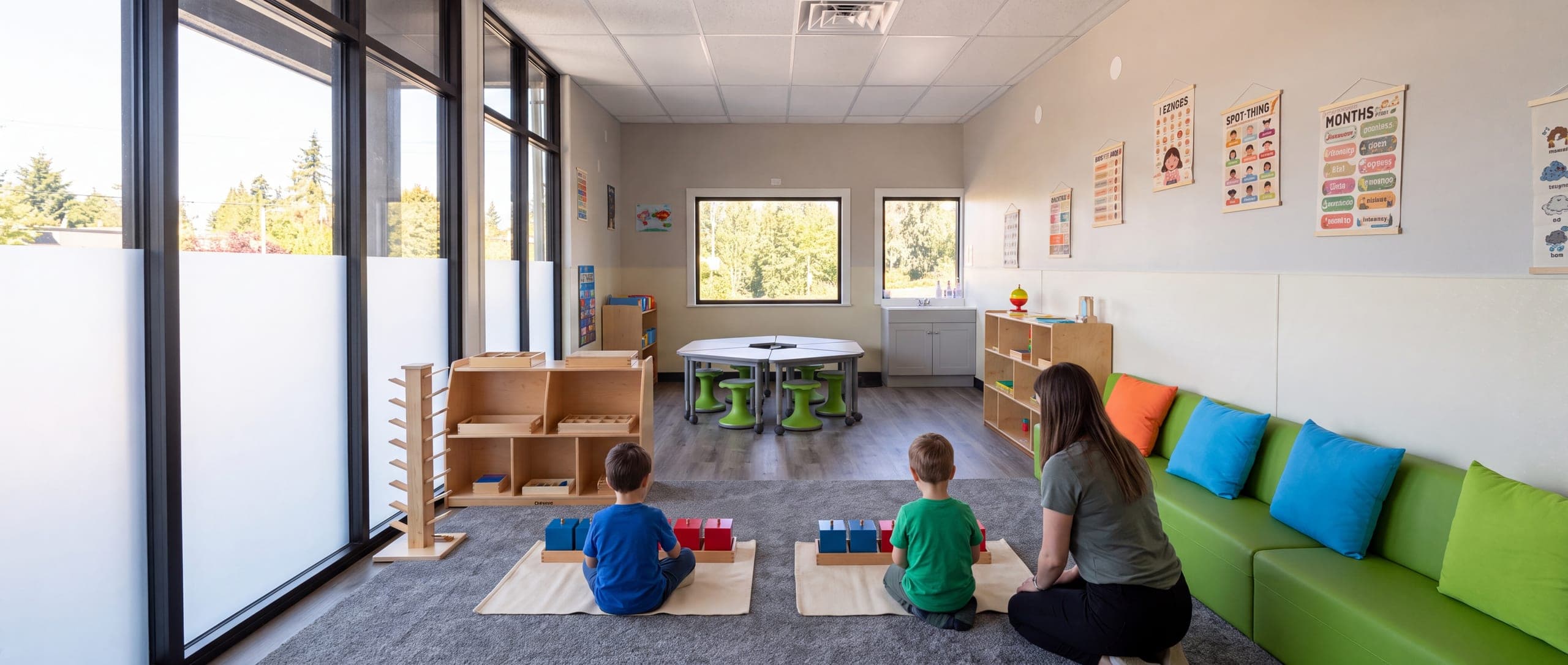
One mixed-age community. Children ages 2–6 share one classroom. Younger children learn by watching, and older children practice leading.
Uninterrupted work cycles. A long, protected stretch of morning work. Nobody is interrupted to move on to the next activity.
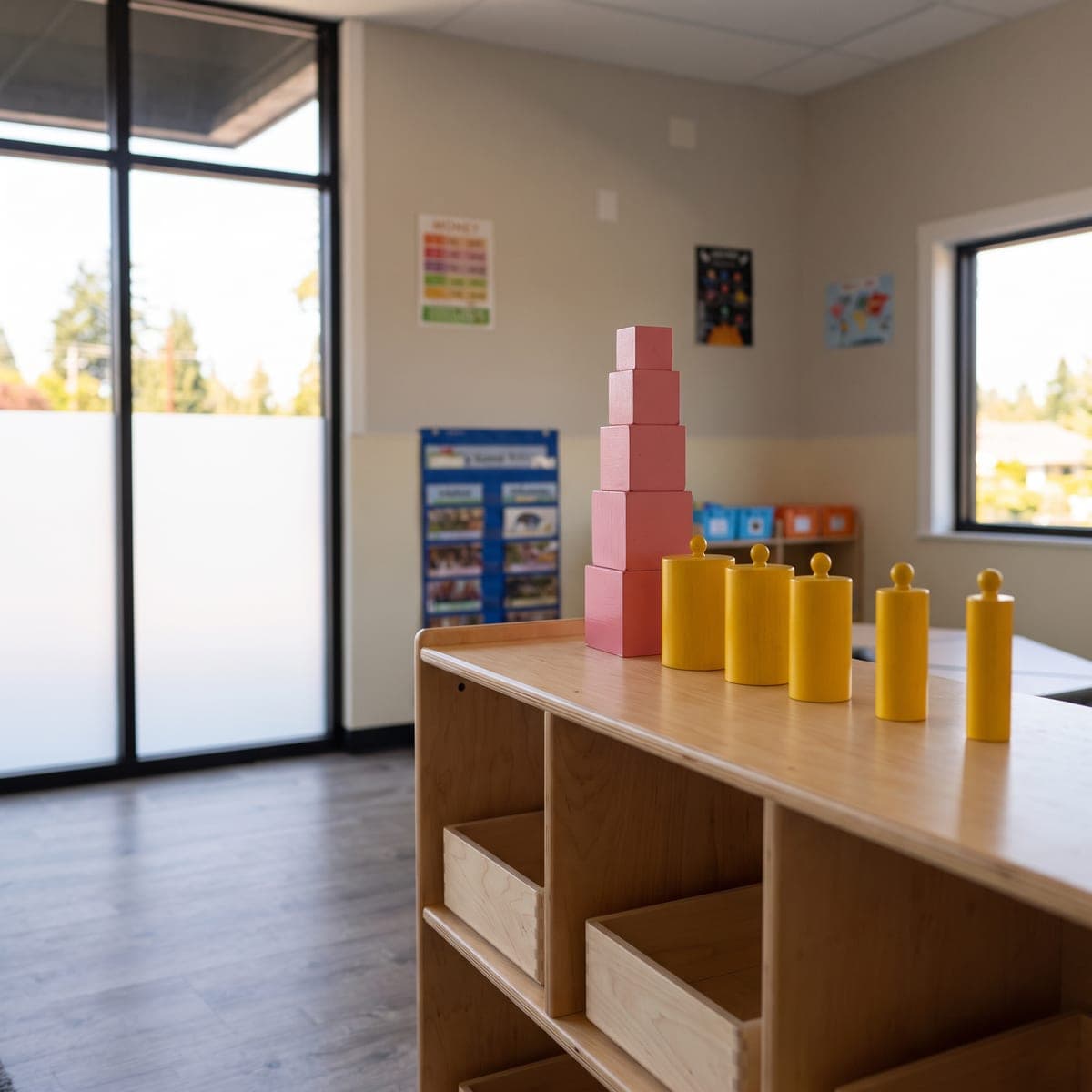
Hands-on Montessori materials. Purposeful materials children can hold, so they learn size, quantity, and sound by touch before they learn the words.
Outdoor exploration. Time outside, with outdoor play and gardening as part of the curriculum.
Self-paced learning. Guides follow each child's readiness rather than a fixed timetable.
The Role of
The guide
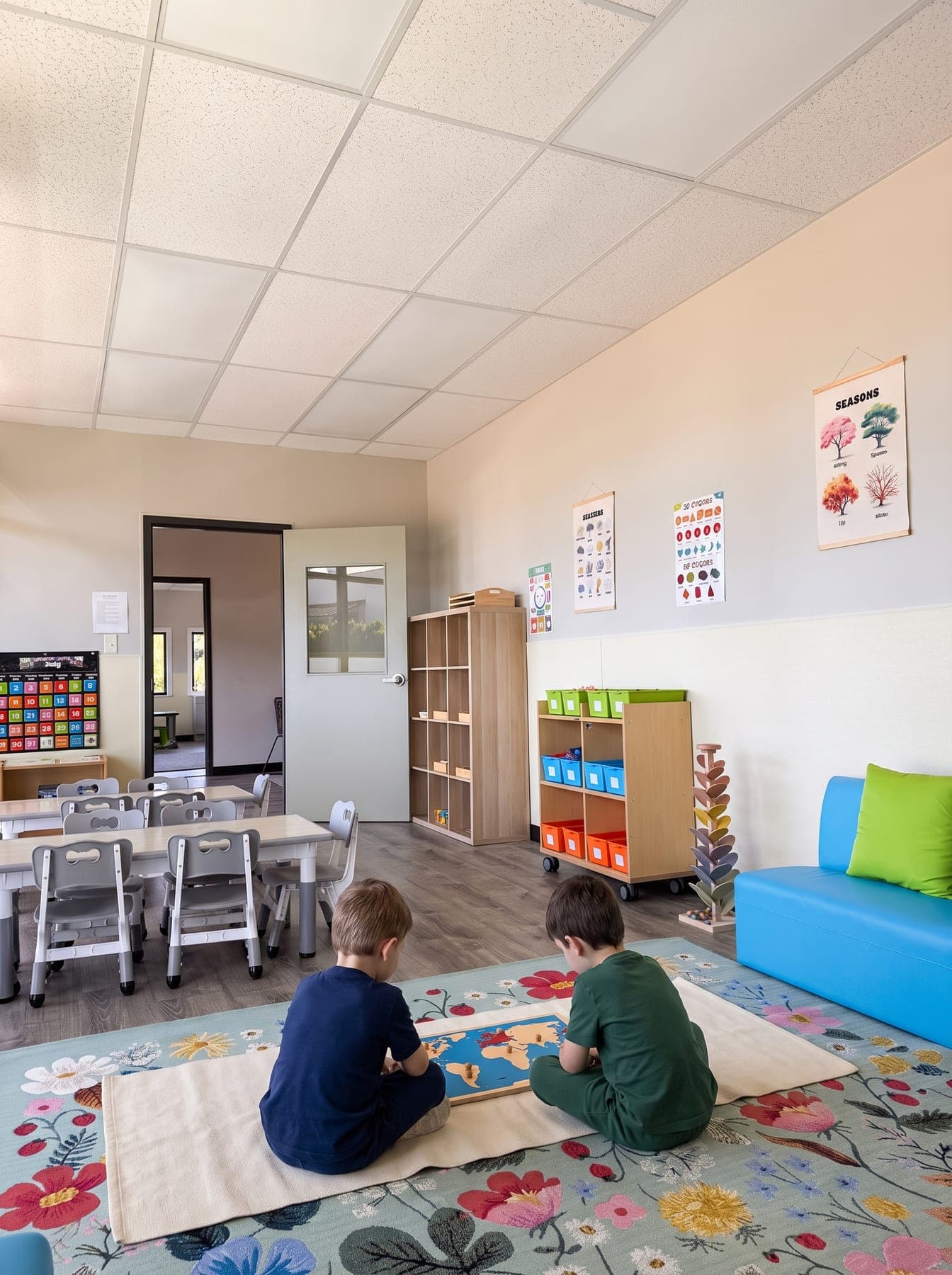
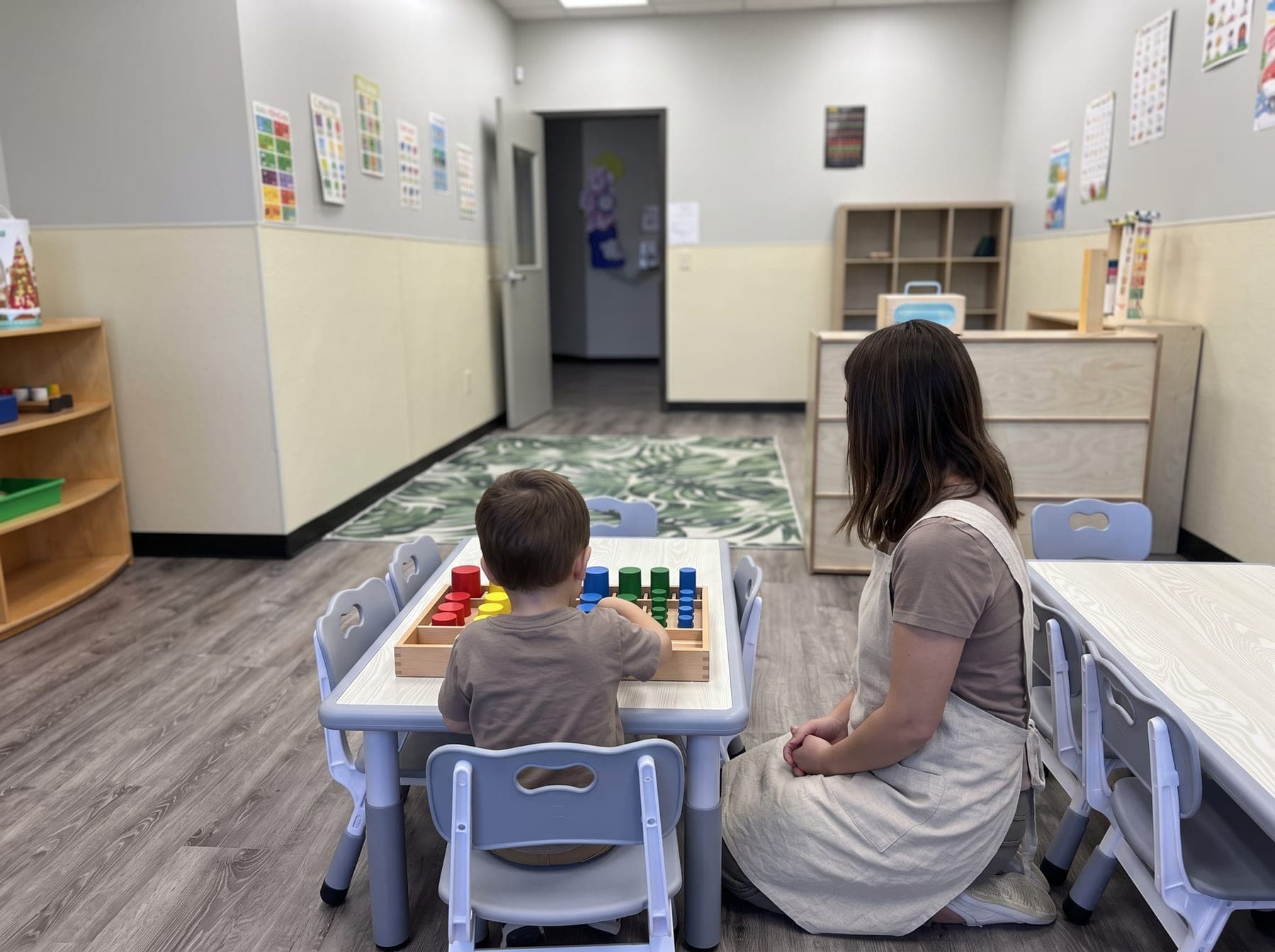
In a Montessori classroom, the adult’s job looks different. A GKA guide presents a lesson to one child at a time, then steps back and lets the child practice.
Because our guides watch each child closely, they know when a child is ready for new work and when to leave them alone with what they are doing.
See It Yourself
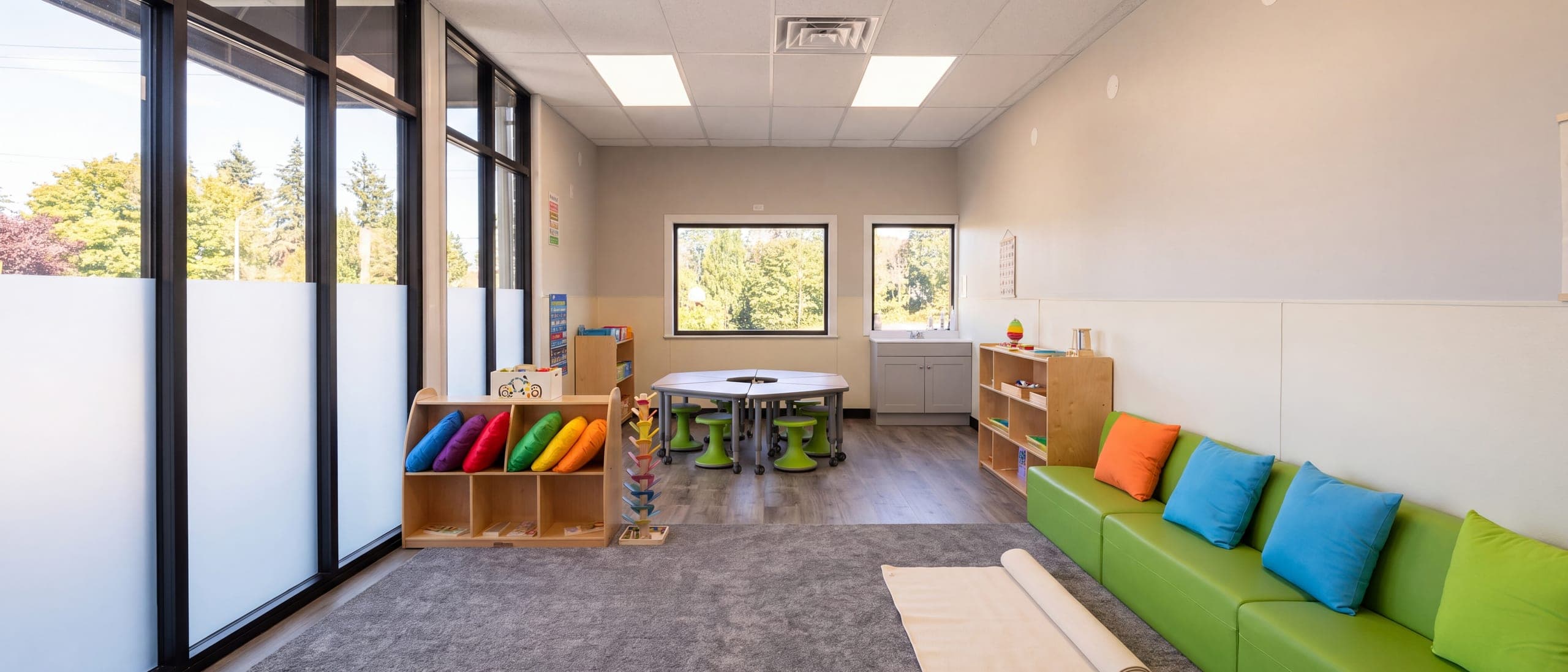
Come see Montessori in action
Tour our Edmonds classroom, meet our guides, and ask about schedules, tuition, and how your child would settle in.